Not subjects of advocacy, but architects of change
The Network was born out of the conviction that women and girls with disabilities are active architects of social change, not merely subjects of advocacy.
Where we come from
Women and girls with disabilities in Kenya continue to face barriers to education, employment, safety, and digital inclusion, often finding themselves overlooked at the intersection of the women’s rights and disability rights movements. These challenges are compounded by stigma, inaccessible systems, violence, and limited access to digital technologies, highlighting the need for stronger, more inclusive advocacy.
The Kenya Network of Women and Girls with Disabilities was born from the conviction that collective voices can drive lasting change. In 2017, organizations, advocates, and experts came together to form the Network and submitted a parallel report to CEDAW—marking an important step in ensuring women and girls with disabilities are seen, heard, and included in human rights conversations. Today, the Network continues to build solidarity, amplify voices, challenge exclusion, and champion a Kenya where every woman and girl can fully enjoy her rights and shape decisions that affect her life.
A barrier-free, inclusive, and just Kenya where all women and girls with disabilities live with dignity, autonomy, and equal opportunity to participate fully in every sphere of life.
To build and sustain a feminist, intersectional, and human rights-based movement of women and girls with disabilities that amplifies their voices, advances their leadership, and drives transformative policy, social, and structural change in Kenya and beyond.
Collective power, leadership, and influence
To strengthen the collective power, leadership, and influence of women and girls with disabilities across Kenya, through inclusive governance, rights-based advocacy, intergenerational mentorship, and sustainable institutional capacity.
This Strategic Vision (2026–2030) positions the Network to evolve from a loose collective to a well-structured, sustainable, and influential national movement, redefining our identity, governance, and partnerships while staying rooted in lived realities.
Read the full strategic vision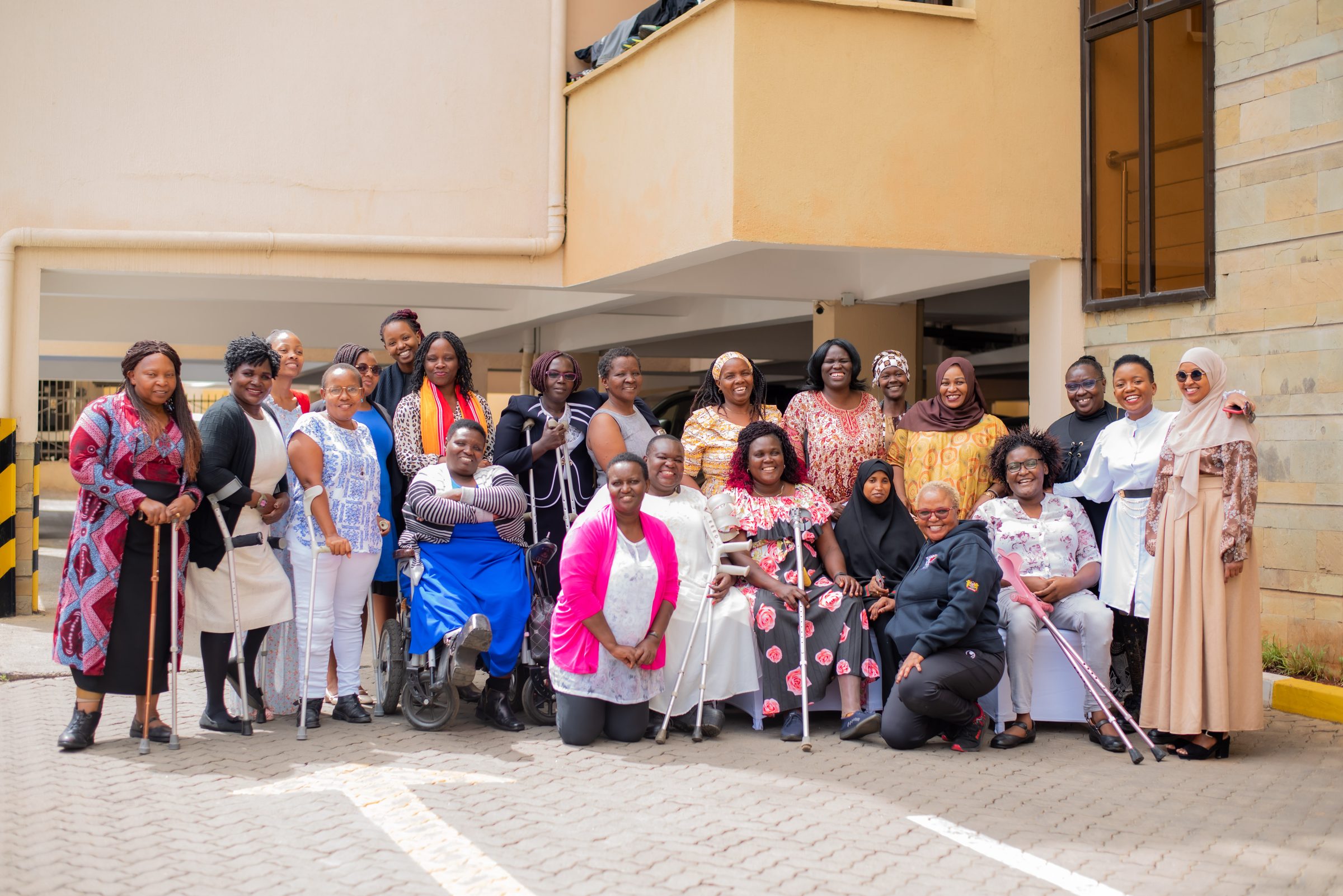
Feminist, human rights, and inclusion
The Network's foundation rests on feminist values, including collective care, accountability, and shared leadership, grounded in the Human Rights-Based Approach (HRBA), ensuring that all strategies uphold dignity, participation, and equality.
This demands attention to intersectionality: recognizing that gender, age, disability, class, sexuality, and geography overlap to shape experiences of exclusion or privilege. Inclusion is both a political and moral commitment, about redistributing power and ensuring leadership reflects the realities of all women and girls with disabilities, including those in rural and marginalized communities.
In line with CRPD Article 3 and Kenya's Constitution (2010), the Network promotes:
- Respect for inherent dignity and autonomy
- Non-discrimination
- Full and effective participation and inclusion
- Equality of opportunity
- Accessibility
Our cross-cutting commitments
Feminist Leadership
Practicing shared power, accountability, and intersectional justice.
Human Rights-Based Approach
Aligning with CRPD Article 3, the Constitution of Kenya (2010), and CEDAW.
Inclusion & Diversity
Representing all disabilities: physical, sensory, intellectual, psychosocial, and neurodiverse.
Digital & AI Inclusion
Leveraging technology to enhance accessibility while ensuring women and girls with disabilities are not left behind in the digital era.
Partnership with Guardians & Institutions
Collaborating with parents, caregivers, and special needs schools to nurture inclusion from early childhood.